

Financial Parenting/Financial Education


Once upon a time financial parenting was a parental role aimed at instilling financial responsibility in children. It was the sound of a family member muttering something about “a money saved is a penny earned,” (now pennies are no longer printed). It was a parent saying, “You don’t need that,” (even when it could be well afforded). Financial parenting was the transmission of values and expectations backed by behavior modeled and values articulated (frequently in annoying ways if you were a ten-year-old with a particular hankering for a game or style of clothing). Financial parenting was a way of life; family culture; personal, intimate, direct.
But since the 1980s, when money morphed into high finance, the financial landscape has become increasingly complex, even for sophisticated adults. That sage advice to ‘save for a rainy day’ seems arcane and irrelevant to kids in the age of Alexa. Days are full, time flies, families can’t figure out how or where to begin. Financial education began to replace financial parenting
I know because since the 90s, I’ve been developing financial education programs for families who, feeling the intensity of consumerism jet fueled by the internet, influencers, video gamers and the increasing invisibility of actual money—sought ways to provide kids with new forms of economic self-defense. Financial education was a wise move on the part of families feeling the diminishment of their parental voice by external forces. But too often financial education doesn’t just augment financial parenting it replaces it, as if instruction can substitute for parental voice, modeled behavior, reinforcement of the micro-actions and opportunities that accompany children’s developmental growth.
How then to get the balance of financial parenting and financial education right? We teach children to read; tie their shoes, say please and thank you, and look both ways before crossing the street. We sing songs to teach the alphabet and buy toys that develop motor skills. But when it comes to money—parents often fall silent. This is not a failing, so much as the simple reality that parents feel ill-equipped now to pass on financial wisdom, so they defer: “They’re too young.” “They’re SO busy.” “I want them to enjoy childhood!” “They don’t need to know--yet.”
Meanwhile, children are ready to talk about money a decade before their parents. Kids observe, copy, absorb the financial habits and values of the grownups around them. Their curiosity is such that when parents avoid, kids fill in the blanks—often with wrong or misinformation.
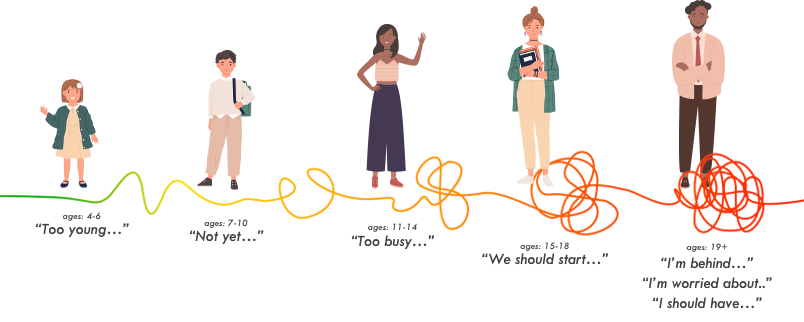
Six-year-olds go on Zillow to find out how much their house is worth and compare it to classmates. Ten-year-olds stress about whether they have the ‘right’ boots, bag, or branded sports equipment. Little ones watch with fascination as cards are waved and ‘things’ appear; cash spits out of machines, and stuff shows up on the doorstep like magic. Fifteen-year-olds bet on sports. Twenty-year-olds ask, “What’s a reasonable rent? $1000? $10,000? They have no context to help them answer that question.
What is Financial Parenting? Financial parenting is the 90 seconds you spend in the car before you enter the grocery store with your little one to talk about what you’re there to buy—and not. It’s the story you tell about what YOUR grandparent or aunt or dad shared about money—when it’s scarce or when it’s plentiful. Financial parenting is about reminding kids that, ‘Just because we can, doesn’t mean we should.’ Financial parenting is less about financial expertise and more about purposefulness. Or as Ron Lieber, the NYT Your Money columnist puts it, “Money talk is really character talk in disguise.”
Not so long ago, parents could explain how to save with instruction about compound interest, the virtues of frugality, the importance of giving with purpose. Families passed on financial wisdom with nagging truisms and lived lives. And money may not have been explicitly discussed—but it was more visible—in bills and coins, less accessible to children. Before money turned digital it was tangible. Today’s financial landscape is so much more complex that even the savviest parents are reluctant to try to teach kids about living within means, why that Gap credit card is not a bargain, and why even when you CAN keep up with the Bezos, it may not be such a good idea.
How to do Financial Parenting? Financial parenting is about making sure kids understand your values and have the confidence to make purposeful financial choices. It begins early, evolves over time and looks like this:
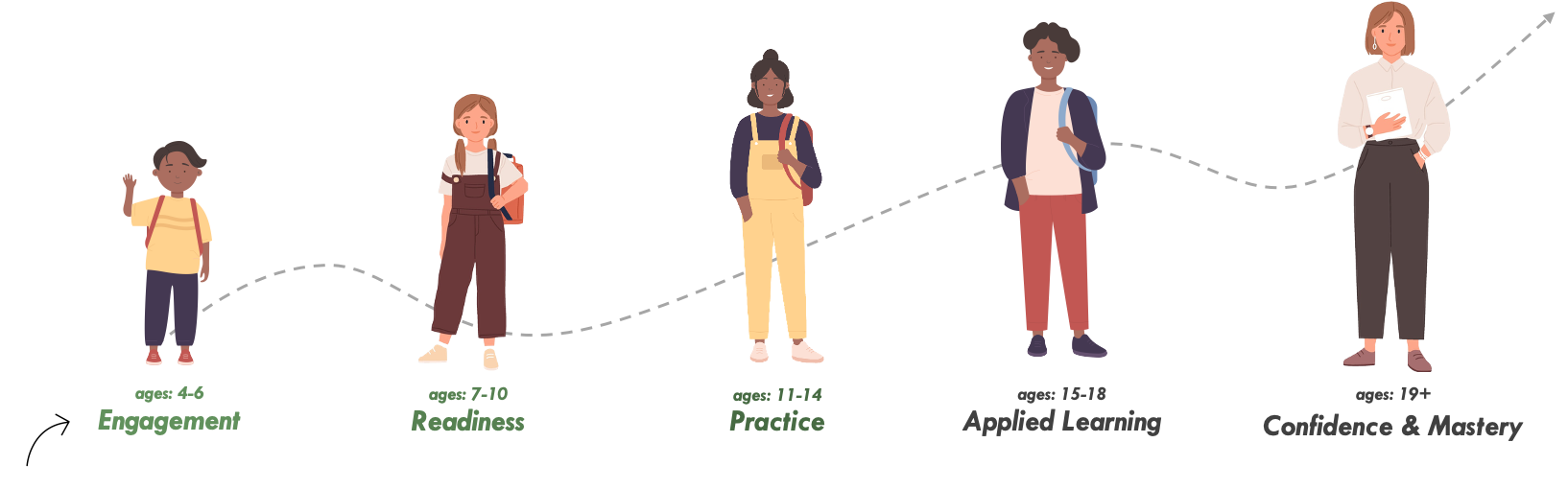
With young children, it starts by engaging them through play to explore values, purpose, aspiration, and discovery. With tweens, early questions signal curiosity and readiness (can I do a lemonade stand, sell bracelets, etc.), offering teachable moments to be captured so they can master an allowance.
Gradually financial education becomes more relevant as teens put their knowledge to work and become financially confident; ready for whatever the world throws at them. With young adults, financial parenting shifts to coaching. You’re no longer making decisions for children but helping them think through their own choices. What are the financial implications of this career path? How much house can you actually afford? What does your generation need to know about building wealth that mine didn’t?
Financial parenting offers lessons taught through experience, not lecture. Real money. Real consequences. Real opportunities to succeed and fail while the stakes are still manageable.
Financial parenting acknowledges that children are listening every time we discuss—or avoid discussing—money. They absorb our anxieties and habits, our relationship with earning, spending, saving, and giving. The question isn’t whether we’re teaching them about money. We are. The question is: what, exactly, are we teaching? Are you instilling fear about what they don’t or may not have; convinced that resources are finite? Or are you encouraging the possibility that there are limitless opportunities and resources for everyone? What, on this spectrum of financial well-being, are you teaching without intention?
Innovation that Matters: Financial Parenting and Financial Education, Getting the Mix Right. I’ve spent decades working with families of means, and I know this: wealth doesn’t protect children from financial incompetence. If anything, it amplifies it. I’ve known trust fund babies in their forties who’ve never negotiated a salary. I watch adult children capsize family businesses because no one taught them the difference between revenue and profit. I’ve counseled parents whose greatest fear isn’t market downturns—it’s that their children will never learn to stand on their own financial feet.
And this isn’t just about wealthy families. In an economy where the gap between financial literacy and financial complexity grows wider every year, every child is at risk. They’ll face student loans, credit cards, mortgages, retirement accounts, gig economy income, cryptocurrency, and a thousand other financial decisions—most before age thirty. Young adults today carry unprecedented levels of debt. Many can’t distinguish between good debt and bad debt. They’re vulnerable to predatory lending, impulse spending, the pressure of influencers (working for everybody but the good of your child) and the seductive mythology that wealth means consumption rather than creation—and that wealth is JUST about material assets, oblivious to the value of their non-material assets—their intellectual, social and human capital
The Opportunity. Here’s what excites me: financial parenting isn’t just about preventing disaster. It’s about unleashing potential. When paired with sound (sometimes even exciting!) financial education, young people grasp how money works, they gain agency. They see themselves not as passive consumers but as economic actors with choices and power. They learn that financial decisions aren’t just about math—they’re about values. What do you care about? What impact do you want to have? How do you want to live?
Financial parenting—amplified by financial education-- creates entrepreneurs who understand cash flow. It creates employees who negotiate fair compensation. It creates citizens who understand economic policy and how it affects their communities. It creates philanthropists who give strategically, not just sentimentally. And perhaps most importantly, it creates adults who can talk about money without shame, secrecy, or magical thinking.
I know why many parents avoid the financial parenting role. Money triggers our deepest anxieties and our greatest shame. We worry we’ll do it wrong. We feel hypocritical teaching what we haven’t mastered ourselves. We fear seeming materialistic or values bankrupt.
But here’s the truth: you don’t have to be a financial expert to be a good financial parent. You just have to be honest, engaged, and willing to learn alongside your children. Some of the best financial conversations I’ve witnessed began with a parent saying, “I’m not sure about this either. Let’s figure it out together.” Your children don’t need you to be a financial expert. They need you to be present and intentional about this dimension of their development.
The Legacy You’re Building. Whether you’re actively engaged in financial parenting or not, you’re creating a financial legacy. Your children are forming beliefs and habits about money right now, this moment. The only question is whether you’re shaping that formation consciously or leaving it to chance, to peer pressure, to TikTok influencers, to credit card companies. Financial parenting is an act of love and liberation. It’s how we prepare our children not just to inherit wealth, but to create it, manage it, and deploy it in service of lives well-lived. The curriculum starts now. Not when they’re older. Not when they ask. Now.
The cost of financial illiteracy is measured not just in dollars, but in dreams deferred, opportunities missed, and potential unrealized. And that’s a price none of our children should have to pay.
What financial conversations are you having—or avoiding—with your children? I’d love to hear about your experiences in the comments.
Joline Godfrey is the author of Raising Financially Fit Kids and the CEO of Bounce10, LLC
Good read. We need a Bounce 10 current affairs for teens. We have bestowed a lot of info on them but things are changing so fast it never feels like enough.
Well done, Joline. The notion that we’re teaching our kids about money no matter how explicit or deliberate we are is powerful. Do we want to do by design or by accident? is the question.